Commercial roof replacement in Indianapolis demands a contractor with proven expertise in flat, low-sloped, and metal systems. Indy Roof Rangers specializes in these commercial applications, working directly with insurance companies to secure proper coverage. Their team delivers high-quality results across Indianapolis, ensuring code-compliant installations for active facilities.
Key Takeaways
- Indianapolis weather accelerates commercial roof deterioration, forcing property owners toward full replacement sooner than expected.
- Flat and low-slope systems dominate Indianapolis commercial buildings, collecting standing water that degrades membrane seams.
- Insurance claim outcomes shape replacement decisions, with denied or underpaid claims leaving property owners carrying the full financial burden.
- Facility managers who schedule inspections before visible leaks appear catch deterioration early, often reducing total project scope.
What drives commercial roof replacement in Indianapolis?
Indianapolis weather accelerates commercial roof deterioration. Storm damage, seasonal temperature swings, and aging materials force property owners toward full commercial roof replacement sooner than expected. Delaying the decision risks interior water damage, mold growth, and structural compromise that multiply repair costs.
Why do flat roofs need replacement more often in this region?
Flat and low-slope systems dominate Indianapolis commercial buildings. These designs collect standing water after heavy rains. Ponding water degrades membrane seams and promotes leaks. Specialized contractors understand the drainage and flashing details these roofs demand.
How does insurance affect the replacement timeline?
Insurance claim outcomes shape replacement decisions for many Indianapolis businesses. Indy Roof Rangers works directly with insurance companies to secure proper coverage for storm-related damage. A denied or underpaid claim leaves property owners carrying the full financial burden. Professional claim advocacy helps avoid that outcome.
The company handles new business roof installations and industrial roof install projects with the same disciplined approach. Every replacement follows local code requirements and manufacturer specifications. Facility managers who schedule inspections before visible leaks appear catch deterioration early. That proactive step often reduces total project scope and downtime. For buildings already showing interior water stains or membrane cracks, commercial roof repair assessments determine whether restoration remains viable or full replacement becomes necessary.
How to choose the right roofing system for your business?
Selecting a commercial roofing system requires balancing durability, energy efficiency, and budget. Indianapolis facility managers evaluate material performance against local weather patterns and building codes. The wrong choice leads to premature failure and unbudgeted capital expenditure.
Commercial roof replacement decisions start with understanding the primary material categories. Single-ply membranes like TPO, EPDM, and PVC dominate low-slope applications across Indianapolis commercial properties. Indianapolis Commercial Roofing notes that these systems serve alongside built-up roofing (BUR) and modified bitumen, which use layered asphalt and fabric for redundancy. Metal roofing provides a different value proposition with longevity measured in decades rather than years.
What roofing materials work best for Indianapolis weather?
TPO membranes reflect heat effectively, reducing cooling loads during humid Indiana summers. EPDM offers proven cold-weather flexibility. PVC resists chemical exposure, a priority for restaurants and manufacturing facilities. Each material carries distinct installation requirements and lifecycle costs.
How does a new business roof stay code-compliant?
A new business roof demands certified installation from the start. Skilled professionals handle the permitting process and structural load calculations. Indianapolis Commercial Roofing confirms that certified crews manage new installations, repairs, and maintenance with full code compliance. Skipping this step risks failed inspections and voided manufacturer warranties.
What should an industrial roof install include?
An industrial roof install requires more than material application. Proper drainage design, insulation placement, and flashing details determine system performance. BUR and modified bitumen systems suit facilities with heavy foot traffic or equipment mounting needs. The company’s commercial roofing services cover these technical requirements through experienced project management.
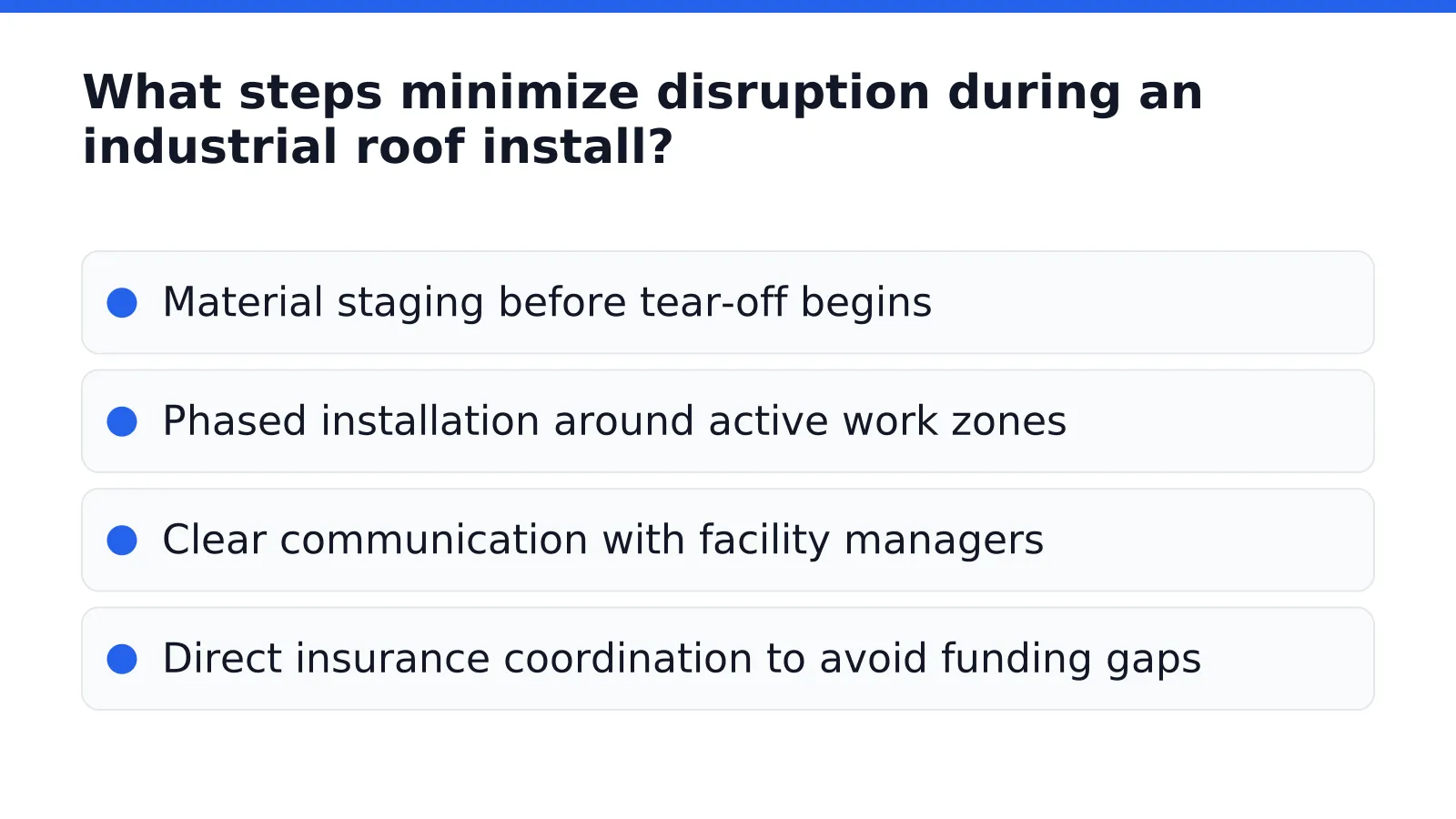
What steps minimize disruption during an industrial roof install?
Experienced commercial roofing teams coordinate directly with facility managers to schedule work around business operations. Proper planning and material staging reduce downtime for Indianapolis industrial facilities. A commercial roof replacement does not require shutting down production when the contractor sequences work strategically.
Indy Roof Rangers brings experience to every project with pride in workmanship and only the best materials. The company gets the job done right the first time, which prevents costly rework and extended closures.
How does insurance claim support affect project timelines?
Insurance claim support helps Indianapolis businesses manage costs during industrial roof install projects. The company works directly with insurance providers to secure appropriate coverage for each claim. This coordination removes administrative delays that stall project starts.
What planning steps protect daily operations?
- Material staging before tear-off begins
- Phased installation around active work zones
- Clear communication with facility managers
- Direct insurance coordination to avoid funding gaps
A new business roof or industrial roof install benefits from a contractor who treats scheduling as a core deliverable. Facility directors avoid revenue loss when roofing work proceeds without interrupting tenants or production lines. Preventative maintenance planning also reduces emergency disruptions later.
FAQ
What drives commercial roof replacement in Indianapolis?
Indianapolis weather accelerates commercial roof deterioration. Storm damage, seasonal temperature swings, and aging materials force property owners toward full replacement sooner than expected.
How does insurance affect the replacement timeline?
Insurance claim outcomes shape replacement decisions. Roof Rangers works directly with insurance companies to secure proper coverage for storm-related damage.
Conclusion
Indianapolis business owners who act on early warning signs avoid the compounding costs of delayed commercial roof replacement. Partnering with a contractor that coordinates insurance claims, schedules around operations, and installs code-compliant systems turns a disruptive project into a managed investment. The right decision now protects the building, the budget, and the bottom line.